Don't Skip A Beat with Dr. Marly van Assen
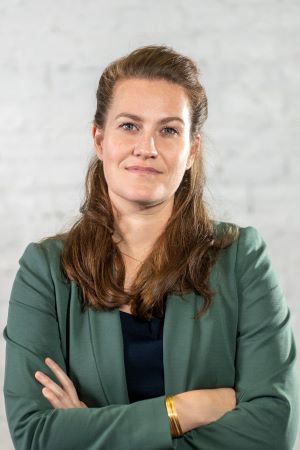
Dr. Marly van Assen currently serves as the co-director of the Translational Laboratory for Cardiothoracic Imaging and Artificial Intelligence and an assistant professor in the Department of Radiology and Imaging Sciences. Her work focuses on utilizing AI and machine learning to improve current imaging techniques and create new ones in the realm of cardiothoracic imaging. We sat down with her to learn more about her work and what to expect from her at the AI in CVD conference on September 12th.
What is your area of expertise at Emory? Can you tell our readers what you specialize in at Emory?
At Emory, I mostly focus on the quantification of cardiothoracic diseases using heart and lung imaging. We use imaging quantification to diagnose disease earlier, predict disease trajectories and prognosticate. We frequently use AI to do either image quantification or build prediction models. This helps us determine the type of therapy or testing a patient would benefit from, based on their level of risk.
What are you looking for on these images, particularly when it comes to the heart?
There are a lot of risk factors for cardiovascular disease (CVD), and I think most people know some of them, such as having high blood pressure, high cholesterol or diabetes. When we are screening, we are looking at patients with specific high-risk or even low-risk scores. From there, we can see how much disease there is in the vessels supplying blood to the heart. Adding in AI, we can quantify those details, look for specific patterns and then create treatment plans from there.
How have you incorporated AI into CVD biomarkers research?
Cardiac imaging is very difficult because your heart is beating during imaging, and you're looking at really small structures. For example, to track disease progression, we can compare scans over time. After starting medication, follow-up scans can reveal whether plaque buildup has progressed. For those types of things, it's nice if you can quantify it because then you can compare numbers instead of people saying, “Oh, it looks like there's more buildup or it looks like less.” We can then incorporate clinical markers. So we can say, “These patients have some risk factors like diabetes or high blood pressure, but they also have a very high risk profile on imaging.” For those types of patients, with AI, the quantification can be done faster, reliably and it's easy to standardize, especially if patients are scanned a few years apart, in different hospitals or by different physicians. AI can help reduce subjectivity and allow for more standardized treatment.
How does AI help in achieving fast, accurate scans?
Performing detailed plaque quantification manually is something we don’t do in clinical practice because it can take up to an hour per patient. AI can help open up new strategies that we can use clinically. It can also help identify new biomarkers or new metrics that people haven't thought about because they simply weren’t visibly quantified before. And now we can say, “Hey, wait, this actually says a lot about this patient.” So if we can provide these values, we actually can treat these patients better.
Another area where we do a lot of research is related to gender. Initial studies on cardiovascular disease were done predominantly on white men, and we do see a very big difference in women and men in cardiovascular disease. We see a very big difference in outcomes and how they are treated. I think quantifying these results and using AI can reveal some of these patterns and differences so we can ensure that people get the best treatment for them and not for the majority population.
How does AI help with workflow?
At Emory, you have cardiology and radiology, both of which do imaging. But very often, these patients either come from their general practitioner, from cardiology or from the emergency department, and they get cardiac imaging. Radiology is busy. Cardiology is busy. Because of that, the analysis must provide a lot of added value for a clinician to want to use it. We have to make sure that if we implement AI we have the IT infrastructure to support it, so that it gives the radiologist and cardiologist results that they can use and are of benefit. You don't want it to continuously crash or give errors. You want it to be as easy as possible to use for people – sort of seamlessly integrate into what they do.
What models are you using to achieve this goal?
We focus a lot on deep learning models because they allow us to actually feed the images into the algorithm, to quantify and look into certain images. We want it to be implementable in clinical practice and fit a workflow. You don't want physicians to have to open 12 different programs and windows before they can access the quantified information. We also use machine learning, where we combine quantifiable features from images with clinical markers, to do risk prediction.
Our institute takes pride in eliminating disparities in healthcare access, making care more affordable and equitable for patients worldwide. How does your work align with those initiatives?
I think that's very interesting because what we're trying to do is build risk profiles that are specific to race and gender because there are differences. You want to give individuals the optimal care and recommendations for them and not for the overall majority based on clinical trials decades ago.
With AI, we can assess large data sets, so if we see gender or race gaps, we can add more women or add more Black people. We do studies in India because South Asian people have much higher risk profiles for cardiovascular disease. We need different thresholds for treating those patients, and AI can help with that.
However, I think one concern with AI is that once there's bias in the data, it will perpetuate that into your AI algorithms and on a bigger scale. To remedy this requires awareness. I always let my students assess what the demographics are, and does AI work better in men and women? Does it do better in the majority than the minority populations? Let's just assess what the differences are and ask, “Does it treat them fairly?” AI is not intelligent; it doesn't have a conscious mind. It does what we tell it to do. So we have to be responsible for assessing those things.
Is there a new imaging technique that you are excited about?
Something that we are seeing in cardiac imaging over the last year is photon-counting CT, which is a new way of CT imaging. It gives you a much higher resolution. So it's like seeing pictures on your iPhone 3 versus your iPhone 14. With better imaging quality, your AI will probably work better and see more things that we previously didn't see. It will help with quantifying new imaging biomarkers that we just didn't see on the old scanners, but see on the new scanners.